


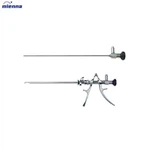
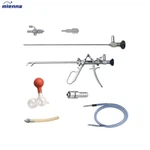


Transforaminal Endoscope
Hangzhou Mienna Business Services Co., Ltd.: Your Professional Transforaminal Endoscope Supplier!
Hangzhou Mienna Business Services Co., Ltd. is a large-scale enterprise specializing in the production and sales of medical products. More than ten years of production and sales have made us a leading comprehensive enterprise with strong R&D strength in the fields of medicine. Our main products include otolaryngology, orthopedics, urology, abdominal surgery, gynecology, disposable related equipment, sports and fitness equipment, etc.
Wide Range of Products
Our main products include orthopedics instruments, otolaryngology instruments, urology instruments, laparoscopy instruments and gynecology instruments. Our products are widely used in the field of medicine.
Leading Service
We have many years of industry experience and a complete production management, quality supervision and sales service operation system. If you want to buy medical products, just send your needs by email and we can respond to you as soon as possible.
Professional Team
As an enterprise that has been tempered for many years, we combine technology and technology to continuously innovate, so that each product is rigorously tested and quality checked.
Complete Qualifications
We have passed ISO quality system certification and CE certification of TUV Rheinland, FDA registration and as well as BSCI audit.
Brief Introduction to Transforaminal Endoscope
Transforaminal endoscope is a rigid optical endoscope that is mainly used for inspection or during intervertebral disc surgery to provide doctors with images or pictures of the patient to assist in surgical operations.



Features of Transforaminal Endoscope
Minimally Invasive
Transforaminal endoscopic surgery enters the intervertebral foramen through the side or rear of the patient’s body, avoiding the large-area incision and stripping of muscles, ligaments and other tissues required by traditional open surgery, and significantly reducing surgical trauma. Minimally invasive means less bleeding, smaller scars, and faster post-operative recovery.
High Precision And Clear Field Of View
The foraminal scope provides high-definition images, allowing the surgeon to clearly see the structures in the surgical area, including nerve roots, thecal sac, and herniated disc tissue. This high-precision field of view helps doctors locate and remove diseased tissue more accurately while reducing the risk of accidentally injuring nerves and blood vessels.
High Surgical Efficiency
Because the procedure is intuitive and precise, doctors can perform surgeries faster. Typically, transforaminoscopic surgery is shorter than traditional open surgery, reducing surgical time and anesthesia risks for the patient.
Quick Recovery After Surgery
Due to the small surgical trauma, the patient has less postoperative pain and can move around earlier. This helps reduce the time spent in bed after surgery and promotes rapid recovery of body functions.
Few Complications
The characteristics of minimally invasive surgery reduce the incidence of complications such as infection and nerve damage. Patients have a better quality of life and are more satisfied after surgery.
Wide Range Of Indications
Foraminal endoscopic technology is suitable for many types of intervertebral disc diseases, including disc herniation, prolapse, spinal stenosis, etc. It can not only be used to remove herniated intervertebral disc tissue, but can also be used to perform operations such as annulus fibrosus molding and bone hyperplasia removal.
Good Economic Benefits
Due to the short operation time, short hospital stay and fast recovery, transforaminal endoscopic surgery not only reduces patients’ medical expenses, but also improves the utilization efficiency of medical resources.
Components of Transforaminal Endoscope
Spinal Endoscope
This is the core part of the surgical system, which is used to provide a surgical field of view, allowing doctors to clearly see the structures in the surgical area. It is usually a rigid optical endoscope with high-definition image quality.
Surgical Instruments
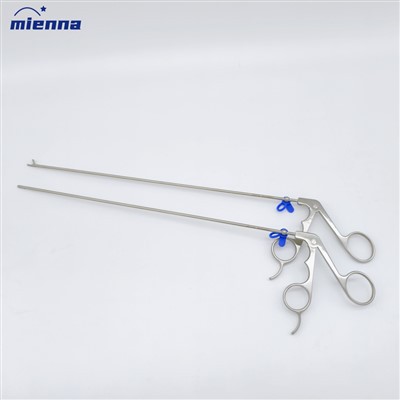
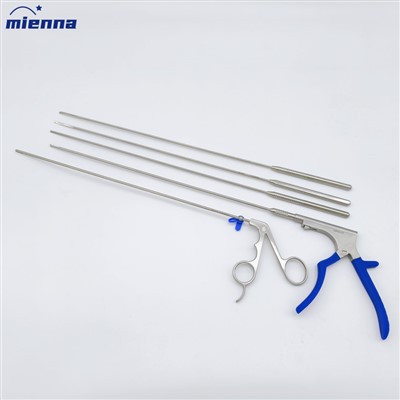
Surgical instruments are an indispensable part of transforaminal endoscopic lumbar disc surgery. They are used to perform various surgical operations, such as dilation, positioning, and resection. The dilator is used to gradually dilate the surgical channel so that the endoscope and other surgical instruments can enter. The guide rod and catheter are used to guide other surgical instruments to the surgical area. The nucleus pulposus forceps are used to grab and remove the protruding intervertebral disc tissue.
Probe And Protective Sleeve
It is used to detect and protect the surrounding tissue to avoid damage. The cutting ring is used to cut and trim the edges of the tissue. The nerve retractor is used to pull and expose the nerve root for better surgical operations.
Imaging System
The imaging system usually includes imagers, imagers and other equipment. It is used to display images of the surgical field of view, allowing doctors to observe the surgical process in real time and make adjustments as needed. High-definition image display helps doctors judge the surgical situation more accurately and reduce surgical risks.
Angle And Diameter
Choose the appropriate angle and diameter of the endoscope according to the surgical needs. A smaller diameter may be easier to pass through a narrow intervertebral foramen, while a larger diameter may provide more field of view and operating space.
Optical Performance
Consider the optical system performance of the foraminal endoscope, such as focal length, depth of field, etc., to ensure that a stable field of view can be obtained during surgery.
Clarity Of Field Of View
Choose a foraminal endoscope with high-definition image quality so that the doctor can clearly see the structure of the surgical area and reduce surgical risks.
Product Quality
Consider factors such as the material, manufacturing process and durability of the foraminal endoscope to ensure that it can maintain stability and reliability during use.
Cost-Effectiveness
Consider factors such as the purchase cost, use cost and maintenance cost of the foraminal endoscope and choose a product with high cost performance.
How To Maintain Transforaminal Endoscope?
Cleaning
Use a mild detergent or a special medical device cleaner and clean according to the instructions. Avoid using overly irritating or corrosive detergents to avoid damaging the surface of the mirror. When cleaning, pay special attention to the mirror surface, lens, connection parts and other places where dirt is easily accumulated. Use a soft cloth or cotton swab to wipe gently, and avoid scratching the mirror with hard or sharp objects.
Regular Inspection And Maintenance
Regularly check the optical properties of the mirror, including field of view clarity, focal length, depth of field, etc. Check whether the connection parts of the mirror are firm and whether the operation is smooth. If there is looseness or jamming, adjust or replace the relevant parts in time.


Disinfection
Choose an appropriate disinfection method for disinfection according to the disinfection specifications of the hospital or clinic. Common disinfection methods include high-temperature steam disinfection, chemical disinfectant immersion, etc. Before disinfection, ensure that there is no residue on the surface of the mirror and operate according to the operating instructions of the disinfection equipment.
Storage
Store the interforaminal endoscope in a dry, ventilated, dust-free environment, away from direct sunlight and moisture. When storing, the mirror body should be placed in a special packaging box or protective cover to avoid collision or scratches.
Frequently Asked Questions